
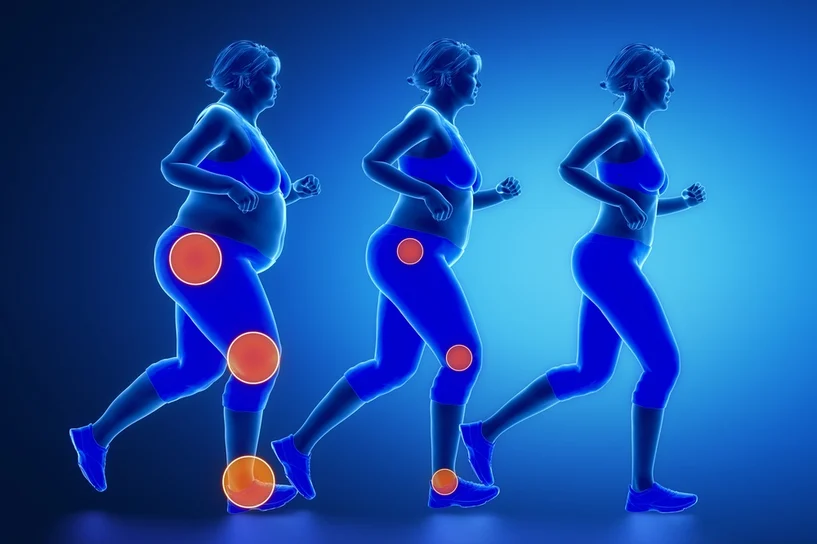
Are Your Knees Carrying More Than Your Body Weight?
Many people think knee pain is simply a part of aging. Others blame arthritis, old injuries, or lack of exercise. But one of the biggest contributors to joint pain often goes unnoticed: excess body weight.
The relationship between being overweight and joint health is stronger than most people realize. Even a small increase in body weight can place tremendous pressure on your knees, hips, and spine.
The good news? Losing weight — even a modest amount — can significantly improve pain, mobility, and quality of life. Let's understand why.
Why Your Knees Are So Vulnerable
Your knees are the largest weight-bearing joints in your body. Every step you take places force through your knee joints. Research suggests:
- Walking can place 3–4 times your body weight on your knees
- Climbing stairs may place even greater stress
- Running can increase joint loads substantially
This means gaining 10 kg may add 30–40 kg of additional force on your knees with every step. Over time, this extra stress can damage cartilage, increase inflammation, and accelerate joint degeneration.
How Overweight Affects Your Joints
Many people believe weight only affects the knees because of pressure. The truth is more complex — overweight affects joints in two major ways.
1. Increased Mechanical Stress
Extra weight means greater pressure on cartilage, faster wear and tear, reduced shock absorption, and increased joint strain. This can lead to:
- Knee pain
- Hip pain
- Lower back pain
- Reduced mobility
2. Increased Inflammation
Fat tissue is not simply stored energy — it produces inflammatory chemicals that circulate throughout the body. These inflammatory substances can increase joint inflammation, accelerate cartilage damage, worsen arthritis symptoms, and increase pain sensitivity. This explains why being overweight can even affect joints that do not bear weight, such as the hands.
Which Joints Are Most Affected?
Knees
The knees are the most commonly affected joints. Excess body weight significantly increases the risk of osteoarthritis, cartilage damage, and chronic pain.
Hips
The hip joints also experience increased stress. This may lead to hip arthritis, reduced mobility, and difficulty walking.
Lower Back
Extra weight alters posture and spinal alignment. This can contribute to back pain, disc problems, and reduced flexibility.
Ankles and Feet
Additional body weight can strain ankle joints, foot arches, and tendons and ligaments.
The Connection Between Overweight and Arthritis
Many studies have shown that being overweight is one of the strongest risk factors for knee osteoarthritis. People with excess weight are more likely to develop:
- Knee arthritis
- Faster cartilage degeneration
- More severe symptoms
- Earlier onset of joint disease
Even moderate weight gain over several years can increase the risk significantly.
Early Signs That Weight May Be Affecting Your Joints
You may notice:
- Knee pain while climbing stairs
- Difficulty standing for long periods
- Joint stiffness in the morning
- Pain after walking
- Reduced physical activity
- Swelling around the knees
These symptoms should not be ignored. Early intervention can prevent further damage.
Why Weight Loss Can Reduce Knee Pain
One of the most encouraging findings in orthopedic medicine is this: even modest weight loss can improve joint pain. Research suggests that losing just 5–10% of body weight may:
- Reduce knee pain
- Improve mobility
- Lower inflammation
- Improve function
- Reduce stress on joints
For example, a person weighing 90 kg who loses 9 kg may significantly reduce knee joint stress during daily activities.
The Vicious Cycle of Overweight and Joint Pain
Many patients experience a cycle like this: weight increases, knee pain develops, physical activity decreases, weight increases further, and pain becomes worse. Breaking this cycle is essential — even small improvements in movement can lead to meaningful health benefits.
Can Overweight Cause Arthritis?
Overweight itself does not directly cause arthritis in every person. However, it significantly increases the risk. Factors include joint overload, chronic inflammation, reduced physical activity, and muscle weakness. The longer excess weight persists, the greater the risk.
How Doctors Evaluate Weight-Related Joint Problems
A proper evaluation usually includes:
Clinical Assessment
- Pain location
- Walking ability
- Joint movement
Imaging
- X-rays
- MRI scans if necessary
Weight and Lifestyle Assessment
Doctors may assess body weight, physical activity levels, metabolic health, and nutrition habits. Understanding the complete picture helps develop personalized treatment plans.
Treatment Options for Weight-Related Joint Pain
Treatment is rarely about one solution — it often involves several approaches.
1. Weight Management
Even gradual weight loss can improve symptoms. Goals should be realistic and sustainable.
2. Exercise Programs
Appropriate exercises may include walking, swimming, cycling, and strength training. Exercise helps improve muscle strength, support joints, and reduce pain.
3. Physiotherapy
A physiotherapist may help improve mobility, strengthen muscles, and reduce stress on joints. Explore Physiotherapy & Rehabilitation Chennai.
4. Pain Management
Depending on the condition, treatment may include medications, anti-inflammatory treatments, and injections.
5. Regenerative Therapies
Some patients with early arthritis may benefit from treatments such as PRP therapy, bone marrow stem cells, stromal vascular fraction, and IV collagen therapy. These treatments aim to support joint health and reduce symptoms. Explore PRP Therapy Chennai.
Best Exercises for Overweight Individuals With Knee Pain
Low-impact activities are usually safest.
- Walking — short walks can improve mobility
- Swimming — water reduces joint stress
- Stationary cycling — builds strength while protecting joints
- Strength training — stronger muscles support the knee
- Stretching — improves flexibility and movement
Always consult a healthcare professional before beginning a new exercise program.
Foods That Support Joint Health
Nutrition plays an important role. Helpful foods include:
- Fish rich in omega-3
- Fruits and vegetables
- Nuts and seeds
- Lean proteins
- Whole grains
Limiting processed foods and excessive sugar may also reduce inflammation.
When Should You See a Doctor?
You should seek medical advice if:
- Pain lasts more than a few weeks
- Walking becomes difficult
- Swelling develops
- Daily activities become challenging
- Exercise becomes painful
Early treatment often leads to better outcomes.
Can Losing Weight Avoid Knee Surgery?
In some patients, weight reduction may improve symptoms, delay arthritis progression, reduce joint stress, and improve treatment outcomes. However, every case is different — the stage of arthritis and overall joint condition play important roles.
Why a Comprehensive Approach Matters
Joint pain is not always simply a knee problem. It may involve weight, metabolism, inflammation, muscle strength, and lifestyle factors. Addressing all of these factors often produces better long-term results.
Key Takeaway
Excess body weight places significant extra force on the knees, hips, and spine, and can accelerate cartilage wear while driving joint inflammation. Even a modest weight loss of 5–10% may meaningfully reduce knee pain, improve mobility, and lower the risk of arthritis progression — especially when paired with the right exercise, physiotherapy, and nutrition approach.
How Apex Wellness Approaches Joint Health
At Apex Wellness, joint pain is evaluated from multiple perspectives. The approach focuses on:
- Understanding the root cause
- Assessing lifestyle factors
- Supporting mobility
- Exploring non-surgical treatments
- Long-term joint health and wellness
Every patient receives an individualized treatment plan based on their condition and goals.
Frequently Asked Questions
Can Overweight cause knee arthritis?
Overweight significantly increases the risk of developing knee osteoarthritis.
How much weight loss helps knee pain?
Even losing 5–10% of body weight may improve symptoms.
Can exercise worsen joint pain?
Appropriate exercise often improves joint health and reduces pain.
Is walking good for knee arthritis?
Walking can help many patients when performed at an appropriate intensity.
Can weight loss prevent surgery?
In some patients, weight management may reduce symptoms and delay surgery.
Final Thoughts: Your joints carry you through every stage of life. When excess weight increases the load on those joints, pain, stiffness, and reduced mobility can gradually develop. The encouraging news is that small changes often create meaningful improvements — better movement, less pain, and healthier joints. If knee pain is limiting your daily activities, an early evaluation can help identify the underlying cause and create a treatment plan that supports your long-term mobility.
Wondering If Your Weight Is Affecting Your Joints?
A personalized orthopedic evaluation may help you understand how weight is affecting your knees, whether arthritis is a risk, and how a tailored, non-surgical plan could support long-term mobility.
Book Consultation →