
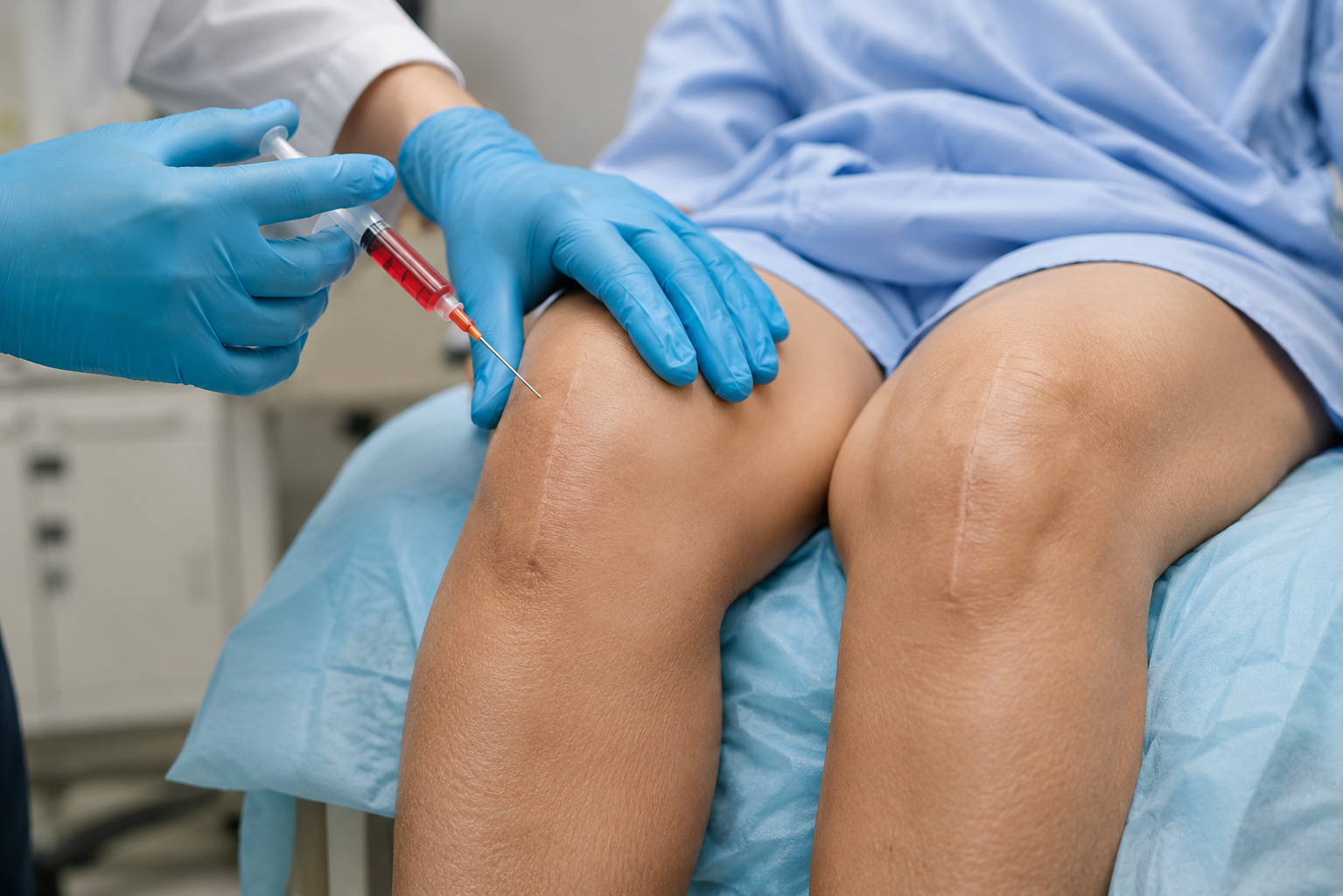
If you are struggling with knee pain, one major question may already be on your mind: "Do I need surgery — or are there other options?" For many people, hearing the word surgery feels intimidating. You may wonder whether surgery is really necessary, whether knee pain can improve without it, whether PRP is worth trying first, whether surgery means a long recovery, and whether you're simply delaying the inevitable.
The truth is there is no one-size-fits-all answer. PRP and surgery are very different treatment approaches, and the right option depends on what is causing the knee pain, severity, joint condition, age, mobility goals, lifestyle, and treatment expectations. For some patients, non-surgical treatment may be explored first. For others, surgery may still be the most appropriate medical option. The key is understanding which option makes sense for your specific condition.
In this guide, we'll explain what PRP therapy is, how surgery works, the differences between PRP and surgery, when PRP may be considered, when surgery may still be necessary, recovery expectations, and how to make an informed decision.
PRP vs Surgery For Knee Pain
PRP therapy and surgery are different treatment approaches for knee pain. PRP (Platelet-Rich Plasma) therapy is a non-surgical regenerative treatment sometimes explored in selected orthopedic cases to support healing and joint recovery. Surgery is typically considered for more severe structural damage, instability, or advanced joint degeneration. The best option depends on diagnosis, severity, and medical suitability.
PRP is not automatically "better" than surgery, and surgery is not automatically necessary. The right decision depends on your knee condition.
What Is PRP Therapy?
PRP stands for Platelet-Rich Plasma Therapy. It is a regenerative treatment that uses platelets derived from your own blood to support healing responses in selected orthopedic situations. PRP therapy may sometimes be explored for knee discomfort, arthritis-related concerns, tendon irritation, sports injuries, and soft tissue recovery.
The process generally involves blood collection, platelet concentration, targeted treatment, and recovery & rehabilitation. Learn more about PRP Therapy Chennai.
What Is Knee Surgery?
Knee surgery refers to procedures designed to address structural problems inside the knee. Depending on the condition, surgery may involve repairing damage, stabilizing ligaments, addressing cartilage problems, or joint replacement in advanced situations. Surgery is usually considered when conservative care has not helped or structural damage is significant.
PRP vs Surgery: What's The Difference?
Here's a quick comparison of the two approaches:
| PRP Therapy | Surgery |
|---|---|
| Non-surgical approach | Surgical procedure |
| Minimally invasive | More invasive |
| Shorter recovery disruption | Longer recovery timeline |
| May support healing in selected cases | Structural correction |
| Used in selected orthopedic conditions | Used in severe structural problems |
They are not competing solutions in every case. Sometimes PRP may be explored first; other times surgery becomes necessary.
When PRP May Be Considered
In selected orthopedic situations, PRP may sometimes be explored for the following:
Mild To Moderate Arthritis
Some patients experiencing early-stage arthritis symptoms may be evaluated.
Tendon Problems
Certain tendon-related issues may sometimes respond to regenerative treatment approaches.
Sports Recovery
Selected movement-related injuries may sometimes be considered.
Patients Trying To Delay Surgery
Some people explore conservative treatment options first. PRP suitability depends on diagnosis, condition severity, imaging, and orthopedic evaluation.
When Surgery May Still Be Needed
Some conditions may still require surgical assessment. Examples may include:
- Severe joint degeneration
- Major ligament damage
- Severe instability
- Structural knee problems
- Failed conservative treatment
- Locking or major mobility restriction
Surgery is not failure — sometimes it is the appropriate treatment. The goal is simply choosing the right option.
Which Option Is Better For Arthritis? PRP vs Surgery For Arthritis-Related Knee Pain
One of the biggest questions patients ask is: "If I have arthritis, should I try PRP or go for surgery?" The answer depends largely on severity — not all arthritis is the same.
Mild To Moderate Arthritis
In selected cases, some patients may explore non-surgical approaches first, such as movement support, strengthening, rehabilitation, orthopedic care, and regenerative medicine approaches including PRP therapy. Some patients explore PRP because they want to stay active, reduce discomfort, delay invasive treatment, and improve movement. PRP is not a cure for arthritis, and suitability depends on orthopedic evaluation.
Advanced Arthritis
In cases involving severe degeneration, advanced structural change, or major mobility limitation, surgical evaluation may become more appropriate — especially if quality of life is significantly affected.
Is PRP Better Than Surgery For Arthritis?
PRP therapy and surgery serve different purposes. In selected mild to moderate arthritis cases, PRP may sometimes be explored as a non-surgical option. However, severe arthritis or structural joint damage may still require surgical evaluation. The right choice depends on diagnosis and severity.
Can PRP Help Avoid Surgery?
This is one of the most searched questions. In selected orthopedic cases, some patients may explore PRP therapy before surgery depending on diagnosis, condition severity, and medical suitability. However, PRP is not intended to replace surgery in every case.
Some patients explore PRP because they want to try conservative treatment first — especially when symptoms are early, mobility is still manageable, or surgery feels premature. But delaying necessary treatment is also not ideal. The key question becomes: what does your knee actually need?
Recovery Comparison: PRP Recovery vs Surgery Recovery
Recovery timelines are one of the biggest reasons people compare these treatments.
PRP Therapy Recovery
Since PRP is minimally invasive, many patients are able to return to routine activities relatively quickly depending on clinical advice. Some temporary soreness may happen. Recovery expectations vary, and the process often involves gradual healing.
Surgery Recovery
Surgery generally involves longer rehabilitation timelines depending on procedure type, severity, and rehabilitation needs. Some surgeries may require structured physiotherapy, temporary movement limitations, and a gradual return to activity.
| Factor | PRP Therapy | Surgery |
|---|---|---|
| Procedure Type | Non-surgical | Surgical |
| Recovery Disruption | Lower | Higher |
| Downtime | Often shorter | Often longer |
| Purpose | Regenerative support | Structural correction |
| Suitable For | Selected cases | Severe structural problems |
Questions To Ask Before Choosing PRP Or Surgery
Before deciding, ask yourself:
- What is causing my knee pain?
- How severe is the damage?
- Have I tried conservative treatment?
- Is surgery immediately necessary?
- Am I a suitable candidate for PRP?
- What are realistic expectations?
- What does imaging show?
- What are my long-term mobility goals?
Good treatment decisions come from proper assessment, not fear.
Why Many Patients Feel Confused
Many people hear conflicting opinions — one person says "do surgery immediately," another says "never do surgery." The truth is usually somewhere in between. Healthcare decisions should not be driven by fear, internet myths, or assumptions. Instead, diagnosis matters.
Common Myths About PRP & Surgery
Myth 1 — PRP Works For Everyone
Reality: Not everyone is a suitable candidate.
Myth 2 — Surgery Always Means Failure
Reality: Sometimes surgery is medically appropriate.
Myth 3 — Knee Pain Automatically Needs Surgery
Reality: Some patients may respond to non-surgical care.
Myth 4 — PRP Gives Instant Results
Reality: Recovery is gradual.
Myth 5 — You Should Delay Treatment Forever
Reality: Early assessment matters.
Key Takeaway
PRP and surgery serve different purposes — PRP may sometimes be explored for selected mild to moderate cases, while surgery remains appropriate for severe structural damage or instability. Neither option is automatically "better." A proper orthopedic evaluation based on your diagnosis, severity, and mobility goals is the only reliable way to choose the right path forward.
Frequently Asked Questions: PRP vs Surgery For Knee Pain
Is PRP better than surgery?
PRP and surgery are different treatments for different situations. The best choice depends on diagnosis.
Can PRP replace knee surgery?
Not always. In selected cases, PRP may sometimes be explored before surgery.
Who is a good candidate for PRP?
Suitability depends on condition severity, diagnosis, and orthopedic assessment.
Can arthritis improve with PRP?
Some patients with mild to moderate arthritis may be evaluated for regenerative care.
Does surgery always mean knee replacement?
No. Different surgeries exist depending on the condition.
How long does PRP recovery take?
Recovery varies depending on the condition and treatment plan.
How painful is knee surgery?
Recovery experiences vary depending on procedure and rehabilitation.
Is PRP painful?
Some temporary soreness may happen.
Can sports injuries heal without surgery?
Some mild injuries may recover conservatively.
What if my pain keeps coming back?
Recurring pain deserves evaluation.
Can walking worsen knee pain?
Depends on the diagnosis.
Does age matter when choosing treatment?
Age, mobility goals, and joint condition may influence decisions.
Is PRP safe?
PRP uses platelets derived from your own blood, but suitability must be assessed.
Why does knee pain worsen climbing stairs?
This may happen due to arthritis, weakness, or joint stress.
What if I want to avoid surgery?
Some patients may explore conservative care depending on diagnosis.
Should I wait before seeking help?
Persistent pain should ideally be evaluated early.
Does severe arthritis always need surgery?
Not always — but advanced degeneration may require evaluation.
Can PRP help active adults?
Selected active individuals may be evaluated depending on suitability.
How do I know which treatment is right?
Proper orthopedic assessment matters.
What matters most?
Understanding the cause of pain.
Expert Perspective: At Apex Wellness Co, one of the most common questions we hear is "should I try PRP or just get surgery?" In reality, neither option should be chosen out of fear or assumption. The goal is not avoiding surgery at all costs — the goal is making the right decision for your knee health based on proper diagnosis.
Unsure Whether PRP Or Surgery Makes More Sense For Your Knee Pain?
A personalized orthopedic evaluation can help you understand what may be causing your pain, whether non-surgical options may be suitable, and when surgery may or may not make sense.
Book Consultation →